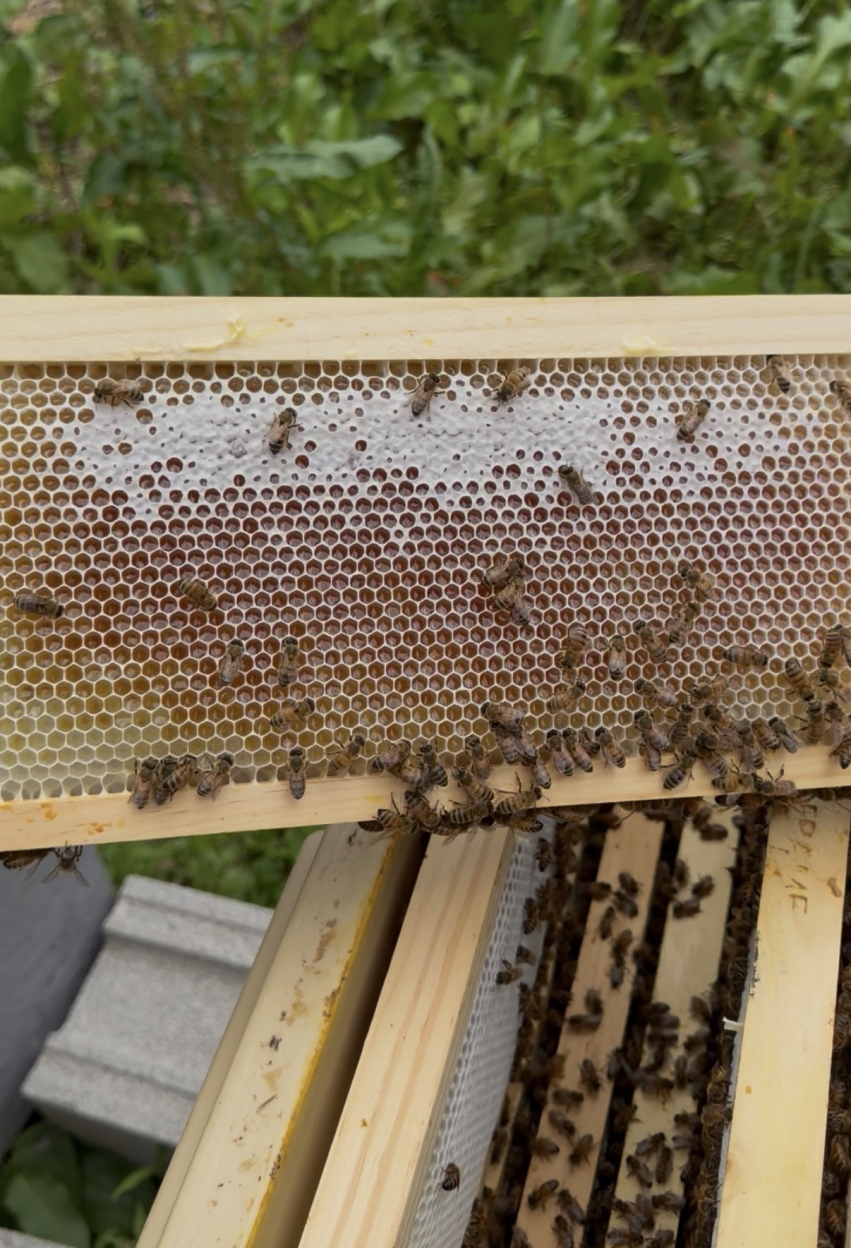
Read the frames, not the calendar
Bees dehydrate nectar from around 70 percent moisture down to roughly 18 percent before they cap it. That wax capping is a finished seal on finished honey. It is the most reliable ready signal you will get, and it is visible at a glance.
My working rules for pulling a frame:
- At least 80 to 90 percent of the cells capped: take it.
- Half capped: give it another week or two if the flow is still on.
- Mostly open cells: it is still nectar. Shake the frame over the hive, and if liquid rains out, leave it.
If you harvest a lot of partially capped frames, a refractometer is a cheap way to know whether the blended moisture is safe. The USDA Grade A limit is 18.6 percent, but most beekeepers aim for 18.5 percent or lower, and honey below about 17.1 percent will not ferment no matter how much yeast is present. Much above 18.5 percent and it can ferment in the jar.
Timing around the flow
The natural harvest moment is the tail end of a nectar flow. Pull supers earlier and you give up honey the bees were still making. Wait too long into the dearth that follows a flow and the bees turn defensive, and an open hive full of honey becomes a robbing target for every colony in range.
There is also a deadline at the end of the season. Every week the supers stay on past the last flow is a week of delay on the varroa treatment that should follow them off, and for most beekeepers supers off and mite treatment on should be the same week. That late summer window is the one that decides whether the colony survives winter, and it is covered in the varroa timing guide.
How many times you harvest is a matter of preference. Many beekeepers take a single harvest at the end of the season, while others pull after a strong spring flow and again in late summer. Spring and fall honey often differ in color and flavor depending on what was in bloom, so a second harvest can be about keeping those crops separate as much as about total yield. Either way the rule is the same: harvest capped frames and leave the colony enough to reach the next flow.
How do you know a flow is ending? The hive scale or the hefting hand stops climbing, fresh white wax stops appearing and the bees get noticeably more interested in any drop of syrup or honey left in the open. Local beekeepers who have kept bees through ten of your seasons know the date within a week, and they are usually happy to tell you.
Leave the bees their share
The supers are the surplus, but only after the brood boxes are heavy. What the colony needs depends on your winter: roughly 60 to 90 pounds of stores in cold climates, 40 to 60 in moderate ones and less where winters are mild.
A full deep frame holds about 8 pounds of honey and a full medium frame about 4 to 5. Heft the brood boxes and count the full frames before you decide how much the supers owe you. The Honey Yield Calculator does the frame-to-pounds math, and the Overwinter Feed Calculator tells you whether what is left meets your winter target. Taking less and skipping fall feeding usually beats taking more and buying sugar.
Harvest day, briefly
Pick a warm, sunny day when foragers are out, late morning is ideal. Clear the bees from the supers with an escape board the day before, or with a bee brush and patience on the day. Work quickly and keep harvested supers covered, because the smell of open honey during a dearth invites every colony in range to investigate.
Extract within a few days while the honey is warm and flows easily. Then put the wet supers back on the hive above the inner cover for a day or two and let the bees clean up every drop. They are far better at recovering it than your sink is.
When the jars are filled, weigh a couple to check your label claims and if you sell or give honey away, the Honey Label Generator will print clean labels with the weight formats most jurisdictions expect.